What are Pre-IPO Perpetual Futures in Crypto? A Complete Guide.
Pre-IPO perpetual futures are crypto derivative contracts that allow retail investors to trade price exposure on private companies before they go public. These continuous, 24/7 contracts are cash-settled using stablecoins like USDC and carry no expiration date.
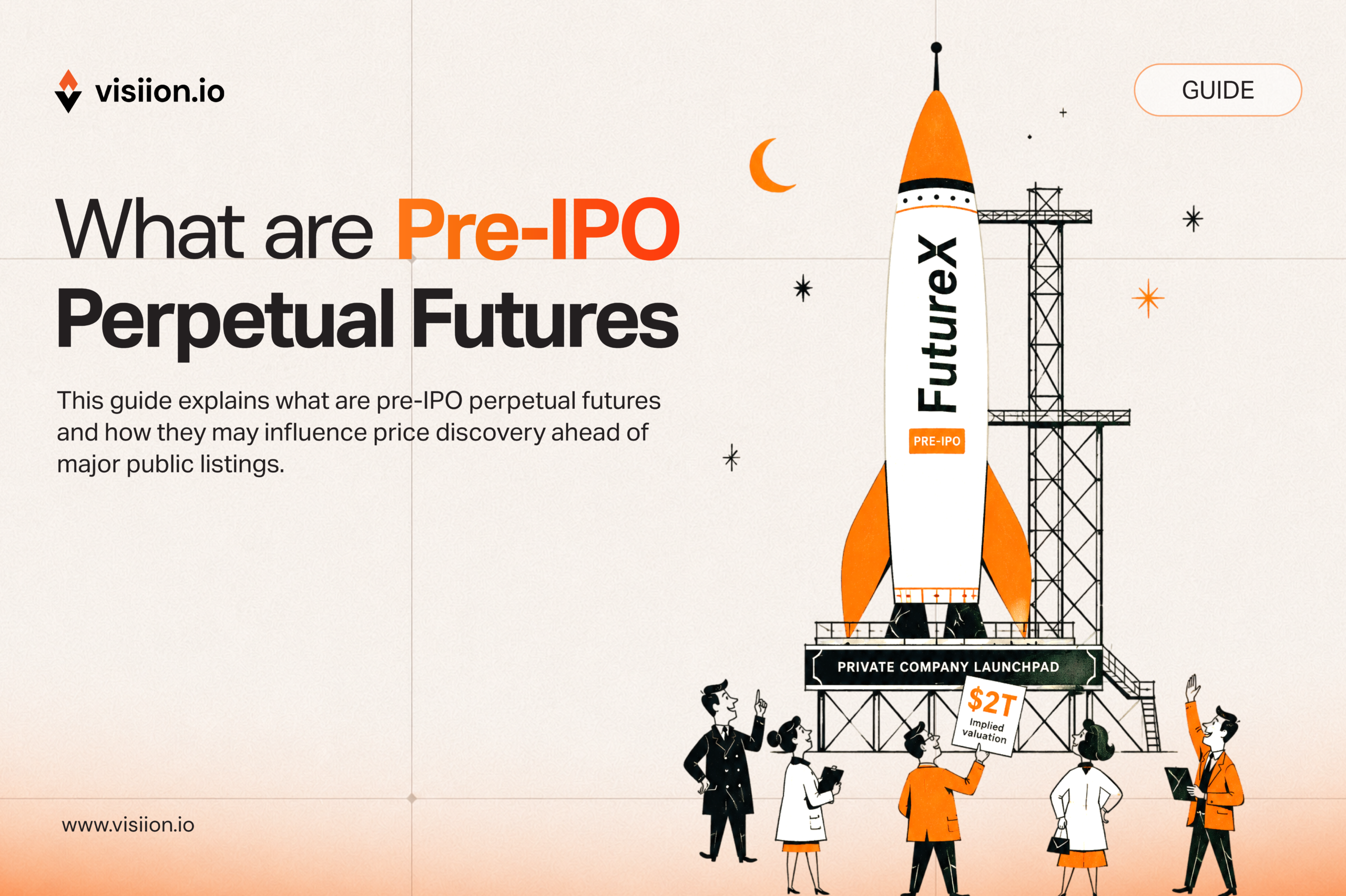
A week before SpaceX listed on Nasdaq, crypto traders had already placed their bets. On Hyperliquid and Binance, a pre-IPO perpetual future tracking SpaceX’s valuation traded around $162 per share, implying a valuation of roughly $2 trillion, compared with the official IPO price of $135. These early signals were not the result of a prospectus leak or insider information. Instead, they reflected a 24/7 crypto derivatives market attempting to price what Wall Street might eventually pay.
Traditionally, private companies like SpaceX and OpenAI were out of reach for retail investors before they went public. This changed when crypto markets introduced a new category of on-chain derivatives known as pre-IPO perpetual futures. Rather than owning shares, traders speculate on price movements through cash-settled derivative contracts that trade around the clock.
This guide explains what are pre-IPO perpetual futures, how they work, where they can be traded, the risks involved, and how they may influence price discovery ahead of major public listings.
How Do Pre-IPO Perpetual Futures Work in Crypto?
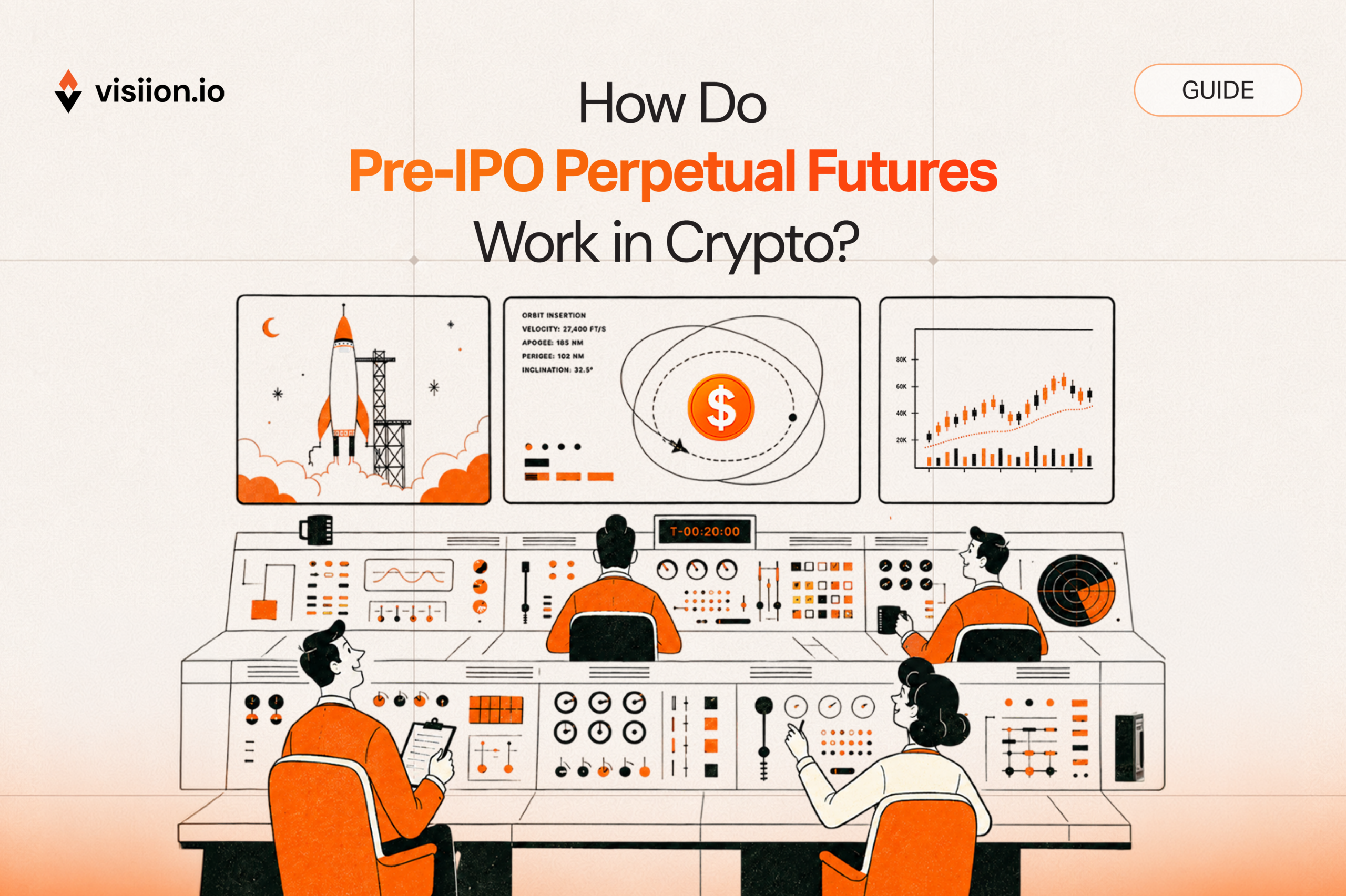
Pre-IPO perpetual futures work as synthetic markets where traders speculate on private company valuations using cash-settled contracts instead of buying actual shares. These contracts have no expiry date and use funding rates and price oracles to keep crypto prices aligned with real-world market expectations.
Traders typically use stablecoins such as USDT or USDC to buy the contracts, with Coinbase and Hyperliquid offering USDC-settled perps while Binance settles in USDT. By definition, these contracts can stay open as long as traders maintain the margin. A trader can go long if they believe the company’s implied valuation will increase or go short if they expect it to fall. Unlike traditional investing, perpetual futures contracts allow you to make money from both directions.
To keep pricing aligned with market expectations, pre-IPO perpetual futures rely on several mechanisms:
- Funding Rates: Periodic payments between long and short traders that prevent contract prices from drifting too far from their reference value.
- Oracle Pricing: Data feeds that provide the external benchmarks needed to accurately track private company valuation metrics.
- Liquidation Rules: Risk protocols that automatically close open positions when a trader lacks sufficient margin to support their trade.
Pre-IPO Perpetual Futures is already gaining traction. As Frank Chaparro noted on X, several exchanges are beginning to launch pre-IPO perpetual futures, giving eligible traders exposure to private-company valuations before public listings.
Also Read: What is a Black Swan Event in Crypto? Meaning, Examples, and How to Prepare?
What Crypto Exchanges Offer Pre-IPO Tokenized Stock Trading?
Several crypto exchanges now offer pre-IPO perpetual futures, and each one structures the product differently. These contracts offer traders exposure to private-company valuations before a public listing.
If you’re wondering how to trade pre-IPO stock in crypto, here’s where the major contracts currently live.
Coinbase International Exchange
Coinbase’s pre-IPO perpetual futures trade on its International Exchange, a Bermuda-licensed entity that operates separately from its US counterpart. (This is distinct from Coinbase Derivatives Exchange, its CFTC-regulated US platform, which offers separate thematic equity-index perpetuals for sectors like AI and defence.) Structurally, the contract is settled in USDC and trades 24/7 without any expiration date. Instead of tracking an estimated per-share price, it tracks the implied market valuation of the underlying private firm. It automatically converts into a standard stock perpetual future once the company completes its official public listing.
Trade.xyz on Hyperliquid
Built on Hyperliquid’s order book infrastructure, Trade.xyz was among the first platforms to list pre-IPO contracts, starting with Cerebras Systems before adding SpaceX. This contract is also settled entirely in USDC using Hyperliquid’s native order book infrastructure. They offer 24/7 leveraged trading tailored for pre-listing price discovery, keeping asset exposure completely transparent and secured by independent blockchain validators.
Binance Futures
Binance’s Pre-IPO Perpetual Contracts launched on Binance Futures with SpaceX perpetual futures under the ticker SPCXUSDT, settled in USDT with up to 5x leverage. The contract became Binance’s second-most-traded product behind Bitcoin, processing over $5.7 billion in volume on the day SpaceX listed. Binance later added a second listing, the OpenAI perpetual contract (OPENAIUSDT), tracking OpenAI’s anticipated valuation ahead of any future IPO. Once a company is listed, Binance transitions the contract into a standard TradFi perpetual to track live market prices.
Also Read: High Frequency Trading: HFT Strategies, Bots, Risks, & How It Works
How Does Crypto Pre-IPO Price Discovery Impact Traditional Stock Markets?

This is where crypto price discovery vs Wall Street plays out in real time: pre-IPO futures can influence market sentiment surrounding upcoming listings and provide an early signal about demand and share prices before the company officially lists. Although the contracts do not determine the IPO prices or represent actual ownership, they provide a near-accurate estimate of how traders value a company ahead of its public debut.
One of the key features of pre-IPO perpetual futures is that they create a market for private- company valuations before the IPO takes place. Before a private company is listed, there is no real-time way to track what investors think they are worth. Pre-IPO futures allow traders to buy and sell contracts based on their expectations. This creates real-time data about the company’s valuations.
If a pre-IPO perpetual futures contract trades at a premium to the expected IPO price, it suggests that traders look forward to strong demand after the official listing. This can attract more investors and serve as a reference point for traders monitoring the listing. For instance, before the SpaceX market debut, its pre-IPO futures traded at a premium on crypto exchanges, signalling a strong trader optimism about the company’s valuation. The crypto derivatives created a real-time, 24/7 market-driven forecast of investor sentiment.
However, it’s best to view these derivatives simply as a way of understanding trader sentiment. IPO pricing is influenced by a broader set of factors, including company fundamentals, institutional demand, market conditions, and more.
What are the Main Risks of Trading Pre-IPO Crypto Contracts?
The main risks of trading pre-IPO crypto contracts include high volatility, leverage liquidations, limited liquidity and the lack of asset ownership. While these derivatives offer retail traders exposure to private company valuations, they have their own set of risks.
High Volatility and Limited Liquidity
Pre-IPO perpetual futures are driven by speculation and market sentiment, making them highly volatile. They also tend to have lower trading volume than major cryptocurrencies, which can lead to sharper price swings and make it harder to enter or exit positions at a desired price.
Leverage Liquidation Risk
Traders using leverage are at an added risk. Leverages can magnify both gains and losses. If the market moves against the leveraged position, the exchange may automatically liquidate the trade.
No Asset Ownership
Buying a pre-IPO perpetual future does not give traders ownership of the company. Thus, traders do not have voting rights, dividends, or any shareholder benefits.
Also Read: How to Track Crypto Whale Movements During Holiday?
Who can Legally Trade Pre-IPO Crypto Perpetuals?
Pre-IPO perpetual futures are available to eligible international traders outside the United States. There are strict security regulations that restrict access to these products for the US retail users and focus on jurisdictions where products are legally permitted.
Consequently, access requirements vary by platform. Most exchange platforms require users to complete Know Your Customer (KYC) verification and comply with local regulations before trading these products.
Additionally, traders should always check the exchange’s eligibility requirements before they start trading. Regulations surrounding tokenized stocks and crypto derivatives continue to evolve, meaning access can differ significantly across countries and platforms.
FAQs
How do crypto pre-IPO perpetual contracts work?
Pre-IPO perpetual futures allow traders to speculate on the valuations of private companies without owning their shares. These cash-settled contracts trade 24/7, have no expiry date, and enable users to profit from both rising and falling valuations. Exchanges use mechanisms such as funding rates, oracle pricing, and liquidation rules to keep the market functioning and prices aligned with valuation benchmarks.
Can retail investors trade shares of private companies on-chain?
Not in the traditional sense. These contracts let traders speculate on a private company’s value before its IPO, but they don’t own any part of the company. This is pre-IPO tokenized stock trading in spirit, exposure to price movement, not ownership.
Why is crypto pre-IPO volume outperforming traditional stock pre-markets?
Crypto pre-IPO markets are often more active because they allow traders to speculate on private-company valuations without owning shares. With 24/7 trading, fewer access barriers, and the ability to use leverage, these platforms attract a wider range of participants than traditional pre-IPO markets.
What are the risks of trading crypto pre-IPO perps?
The main risks include high volatility, low liquidity, leverage-based liquidations, and the fact that traders do not own any real equity in the company. Prices can move sharply based on sentiment rather than fundamentals.
Are pre-IPO crypto futures legal for U.S. citizens?
Most platforms restrict access for the US retail users due to regulatory requirements from agencies such as the SEC and CFTC. Availability depends on the exchange and jurisdiction, and many products are only offered to eligible international users.